
"Shoulder pain wakes me up at night." "I can't raise my arm, and getting dressed is painful." Frozen shoulder or fifty-year shoulder (adhesive capsulitis of the shoulder) can potentially cause the membrane enveloping the joint to thicken and the joint to stiffen, leading to a condition called "contracture" if left untreated.
At NAG Orthopedics, in addition to conventional symptomatic treatment, we have introduced "regenerative medicine (PRP therapy)" and "fascia release injections" that directly approach the tissues causing the pain.
1. Why Does Shoulder Pain Persist?
One of the causes of fifty-year shoulder and frozen shoulder involves inflammation or injury of the tendons (rotator cuff) and ligaments surrounding the joint. Because these changes are difficult to evaluate with a simple X-ray examination, initial diagnosis and treatment are often delayed.
Furthermore, depending on the area, natural repair is difficult to occur, and the reality is that the damage tends to persist with conventional symptomatic treatment such as compresses and analgesics or rest alone. As a result, there are many cases where pain becomes long-term, lasting from several months to several years.
2. "PRP Therapy" Promoting Tissue Repair
PRP therapy is a treatment method where components called "platelets" extracted from the patient's own blood are concentrated and injected into the affected area. Platelets contain many growth factors, which activate the repair process of damaged tissue.
Benefits and Mechanism of PRP Therapy
- Tissue Repair Effect: Not only suppresses pain, but depending on the area, is expected to have the effect of promoting tissue repair itself. As a result, it can be said to be an approach that aims for not just temporary alleviation of symptoms but also the recovery of tissue function.
- Low Side-Effect Risk: utilizes the patient's own blood components, resulting in an extremely low risk of immunological rejection or serious allergic reactions.
- Completed only with an injection: While high therapeutic effects are expected, the treatment is completed with only an injection.
[Important Matters Regarding Self-Pay (Non-Insured) Treatment]
・Standard Cost: PRP therapy (1 session): 132,000 yen (including tax) *Separate fees for initial examination, tests, etc. may apply.
・Risks and Side Effects: There are risks of pain, swelling, subcutaneous bleeding, and infection at the injection site. Serious side effects are rare as self-blood is used, but results vary among individuals, and the same outcome is not guaranteed for all patients.
・Number of Treatments and Duration: Typically, progress is observed after a single injection, but it is also possible to perform it multiple times. Including follow-up observation, it generally requires approximately 3 to 6 months.
Please note that treatment prices are subject to periodic review. For the latest information, please refer to our pricing page.
3. "Fascia Release Injection" Releasing Adhesion
If there is a symptom like "a feeling of tightness and not being able to rotate the shoulder," the tissues around the shoulder joint may be adhered due to inflammation.
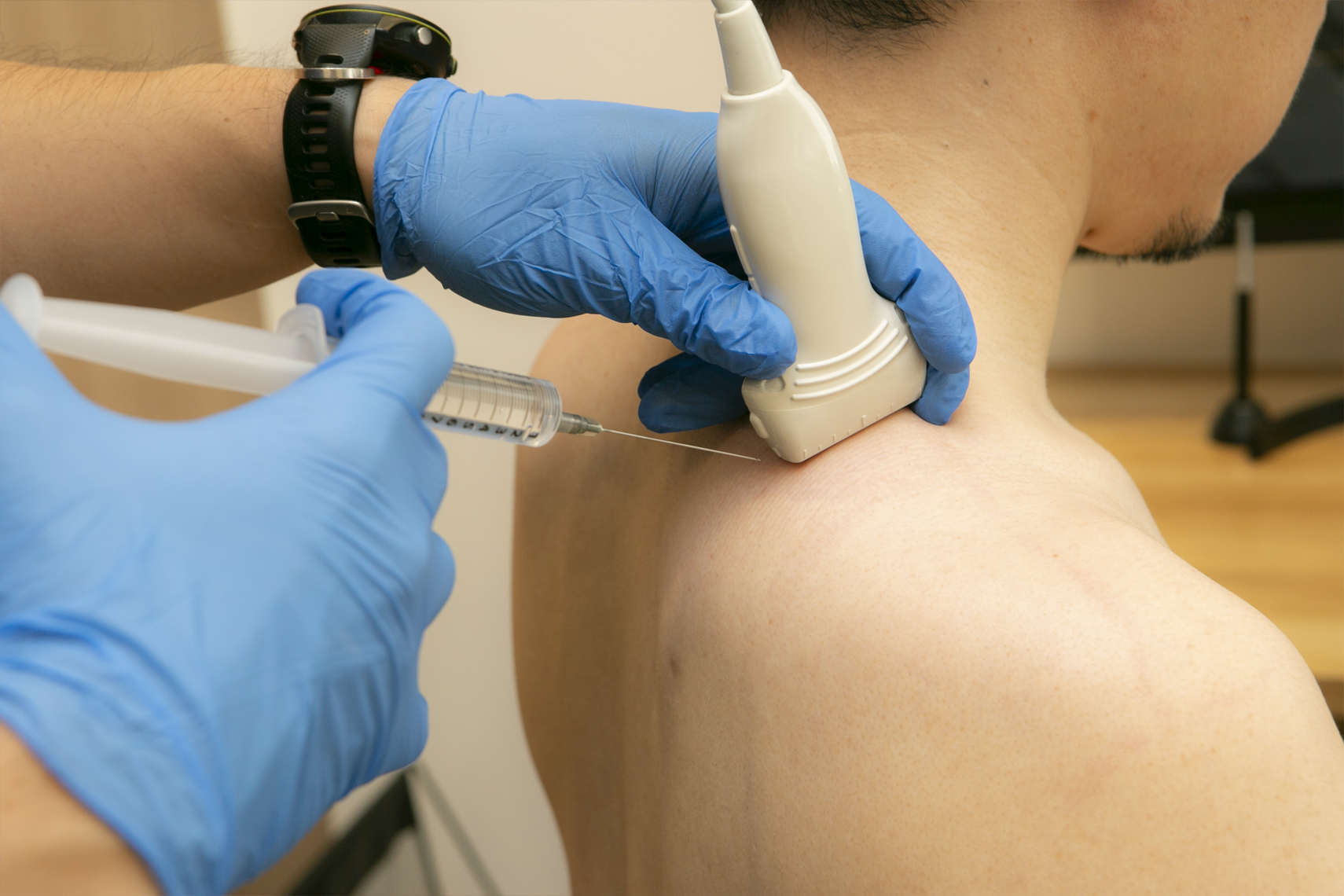
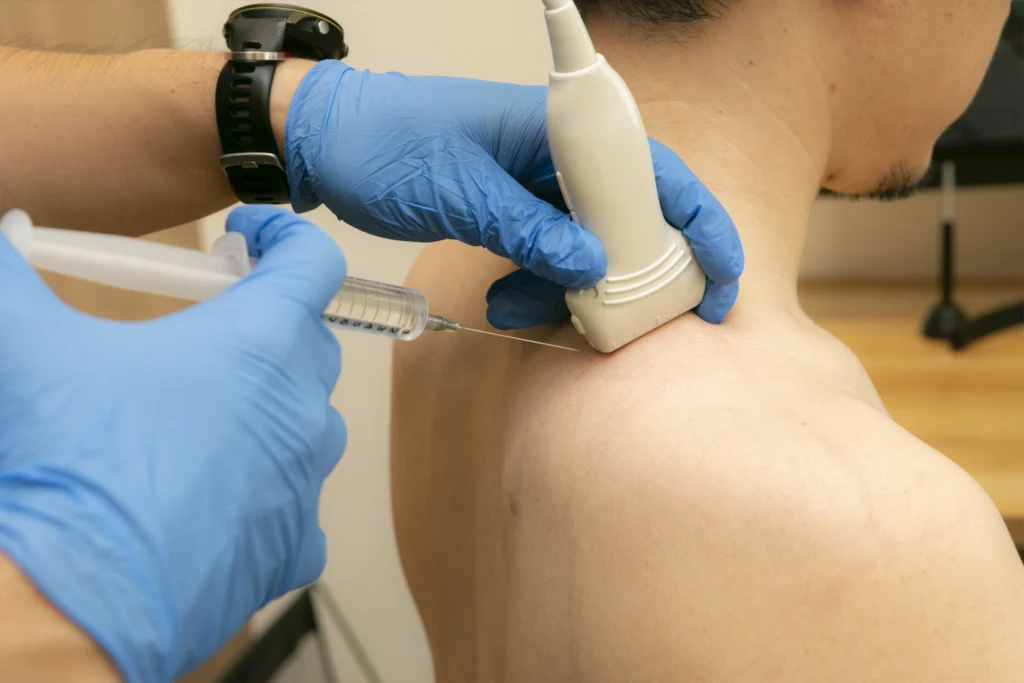
Fascia release (also called hydrorelease) is a treatment method where physiological saline solution is injected into the affected area while confirming it in real-time with an echo. This treatment is said to expect the following effects.
・Detachment by Water Pressure: The injection pressure of physiological saline solution physically detaches adhered tissues.
・Washing Effect of Inflammatory Substances: Inflammatory substances accumulated in the affected area are washed away with water pressure, preparing an environment where tissue repair is likely to proceed.
4. Selective Use with PRP
PRP treatment is suitable for periods when there is strong pain around the shoulder joint. The guideline is a state where hands cannot be raised due to strong pain, or not being able to sleep at night due to pain. PRP is also indicated when the goal is the repair of the damaged part confirmed by tests.
On the other hand, fascia release is a treatment aimed at improving the limited range of motion caused by adhesion of joint surrounding tissues. Even if the pain is relatively mild, improvement by fascia release can be expected if the main symptoms are tightness and limited range of motion (difficulty putting hands through shirts, not being able to put hands behind the back, not being able to raise arms to tie hair, etc.).
Guidelines for Treatment Frequency and Hospital Visits
In the initial stage, treatment once every 1-2 weeks is effective. Thereafter, intervals will be widened according to symptoms, and re-evaluation and procedure will be performed as necessary.
Director of NAG Orthopedics: Yoshimasa Nagumo
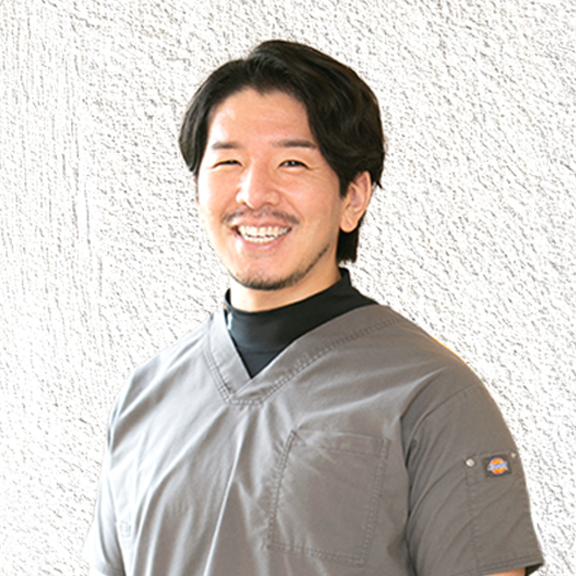
Orthopedic Specialist & Sports Doctor
Dr. Nagumo initially built his career as a surgical oncologist specializing in orthopedic cancer treatment. Subsequently, he moved to the United States to engage in advanced research in the field of regenerative medicine.
It was during his time in the U.S. that a personal injury led him to realize the critical importance of sports medicine. Upon returning to Japan, he transitioned his focus to become a sports orthopedic surgeon.
Currently, he leads the "Athlete Support Program," which provides comprehensive medical support to athletes using a combination of blood analysis and cutting-edge regenerative medicine technologies.
[Click here for the program introduction page:https://nagseikei.jp/en/dr/]

