

If you suffer from joint pain in areas such as your knees or shoulders and have not achieved sufficient improvement with conventional treatments, you may be looking for new options. In this article, we provide a detailed overview of "Stem Cell Joint Injection," a form of regenerative medicine. We will cover basic knowledge, treatment mechanisms, pros and cons, the actual treatment flow, and key precautions.
What Are Stem Cells?
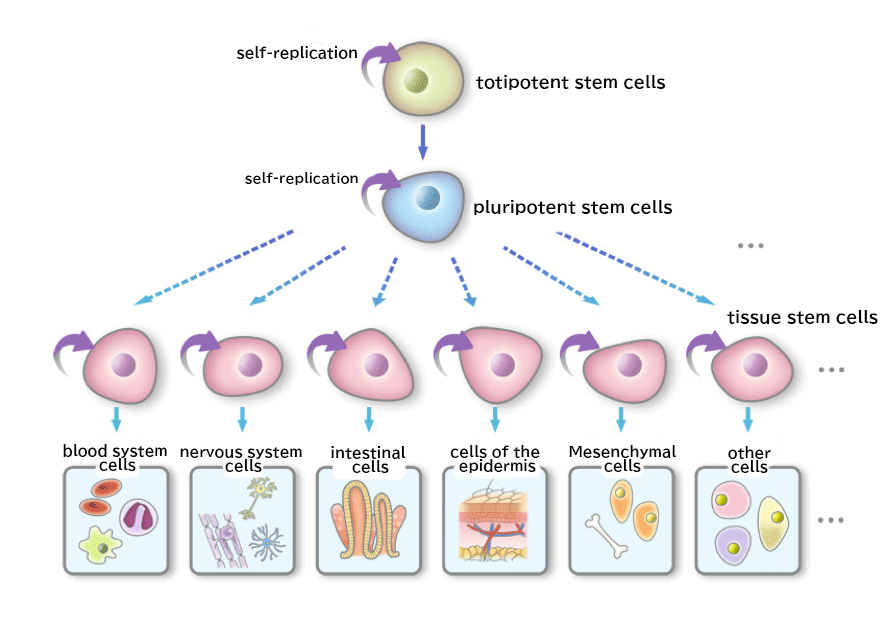
▲ What are stem cells? (Source: SKIP)
Most stem cells currently used in regenerative medicine are undifferentiated cells present in the human body that possess pluripotency, meaning they can differentiate into various types of cells. It has become clear that there are two main types: those circulating in the bloodstream and those residing in individual tissues, with stem cells existing specifically in every organ and tissue.
Stem cells are characterized by their ability to differentiate into specific cell types while replicating themselves. The ability to replicate themselves is called "self-renewal capacity," and the ability to differentiate into specific cells is called "differentiation capacity"—both are essential functions defining stem cells. In addition, they are defined by specific markers (cell surface markers). In any tissue damaged by inflammation or injury, stem cells differentiate into the same type of cell as that tissue, contributing to tissue regeneration and wound healing.
Three Types of Stem Cells
Stem cells are broadly categorized into the following three types:
- Totipotent Stem Cells
Stem cells capable of developing into an entire organism from a single cell; this refers to the fertilized egg.
- Pluripotent Stem Cells
Cells capable of differentiating into almost any cell type in the body. Examples include ES cells (embryonic stem cells) derived from early fertilized eggs, and iPS cells created from somatic cells by introducing "Yamanaka factors" discovered by Dr. Shinya Yamanaka of Kyoto University.
- Multipotent Cells (Somatic Stem Cells / Adult Stem Cells)
Cells in specific tissues (such as internal organs or skin) that continuously generate new cells to replace damaged ones. They have the ability to form cells identical to their resident tissue—for example, hematopoietic stem cells differentiate into blood cells, and neural stem cells into nerve cells. Recent research has shown that they can even cross tissue boundaries to differentiate.
What Is Stem Cell Joint Injection?

Stem cell joint injection is a treatment where your own stem cells are injected into a joint experiencing inflammation or injury.
Conventionally, joint disorders have been treated with oral medications, physical therapy, as well as intra-articular injections of hyaluronic acid or corticosteroids. Recently, platelet-rich plasma (PRP) joint injections have also been utilized, with surgery typically considered when sufficient therapeutic effects are still not achieved. Stem cell joint injection is gaining popularity as a conservative treatment option for joint disorders refractory to PRP therapy.
While there are several options for tissue harvesting, a common approach with less burden on the patient involves harvesting subcutaneous adipose (fat) tissue to isolate and culture stem cells. At our clinic (NAG Orthopedics), we also harvest tissue from subcutaneous fat.
Treatment Mechanism
In PRP joint therapy, injected platelets gradually break down (autolysis) inside the joint, releasing internal growth factors (cytokines) that act on the tissue to suppress inflammation and relieve pain.
Similarly, in stem cell joint injections, the injected stem cells release various bioactive substances while surviving inside the joint. This suppresses inflammation in the surrounding damaged tissue, relieving pain while promoting tissue repair. Furthermore, in the case of stem cell joint injections, it is expected that the injected stem cells will recruit host stem cells to the damaged tissue and that a portion of the injected stem cells themselves will differentiate into damaged cells. Expectations are also high regarding pain relief and tissue regeneration.
Regarding Pain Relief
In Japan, reports indicate that stem cell joint injections for knee osteoarthritis have achieved pain relief effects. Furthermore, combining the injection with subsequent physical therapy is believed to lead to even better outcomes.
Note: It generally takes about 4 weeks after stem cell administration to actually feel the therapeutic effects.
Features of Stem Cell Joint Injection at NAG Orthopedics
Target Sites:
Stem cell treatment at our clinic is regenerative medicine targeting joints. We perform this procedure for joint diseases in the knees, shoulders, hips, elbows, and other joints. Eligibility is determined based on the results of consultation and imaging examinations.

Advantages and Disadvantages of Stem Cell Joint Injection
When considering treatment, it is important to understand both the pros and cons.
Advantages
- Continuous Secretion of Bioactive Substances
The injected stem cells secrete growth factors and inflammatory regulating substances within the joint, improving the intra-articular environment to reduce pain and enhance function. - Uses Your Own Cells
Because stem cells harvested and cultured from your own adipose tissue are used, this treatment option minimizes concerns regarding rejection or allergic reactions. - A Non-Surgical Treatment Option
It serves as an option for patients who have not seen sufficient improvement with conservative therapy or PRP treatment, or for those who wish to avoid surgery whenever possible.
Disadvantages
- Requires Minor Surgery for Fat Harvesting
To harvest stem cells, a procedure to collect fat under local anesthesia is necessary. - Requires a Cultivation Period Before Administration
Because the harvested stem cells must be cultured, it takes about two months before the injection can be administered. - Multiple Hospital Visits Are Necessary
Multiple visits are required for fat harvesting, injection, and follow-up observations.
Flow from Cultivation to Administration
1. Blood Test
To ensure safe cell culture, you will undergo screening for infectious diseases in advance.
2. Tissue Harvesting
At NAG Orthopedics, we harvest stem cells from fat to minimize the burden on the patient.
Local anesthesia is applied to an inconspicuous area such as the abdomen or hip, and a small incision is made to collect a small amount of fat.
The incision site is sutured, and stitches are removed at a later date. Since the incision is very small, the scar will fade over time. Hospitalization is not required.
3. Cell Cultivation
The harvested tissue is sent to an affiliated cell culture facility where stem cells are isolated and cultured. It takes approximately 2 months to prepare an adequate number of stem cells.
4. Intra-Articular Administration of Stem Cells
Stem cell joint injection is performed in an outpatient setting. It uses the same technique as standard joint injections without anesthesia and takes only a few minutes. Once it is confirmed that there is no localized bleeding after administration, you may go home (no hospitalization or prolonged waiting in the clinic is necessary).
Post-Injection Rest Period
A short period of rest is required for the treated area. As long as you consciously avoid movements that place stress on the joint, immobilization (such as braces) is not necessary. Please consult during your outpatient visit regarding specific rest periods.
Individual Differences in Effectiveness
The effectiveness of stem cell joint injections varies from person to person. Factors affecting treatment outcomes include:
Severity of joint deformity at the time of administration
Body weight,Muscle mass,Dietary habits,Underlying medical conditions,Intensity of daily physical activity,Degree of localized rest after administration
[Important Notes Regarding Self-Pay (Uninsured) Medical Care]
This treatment is an out-of-pocket medical expense (self-pay treatment) not covered by public health insurance.
- Cost (tax included)
¥1,320,000
(A separate initial consultation fee of ¥6,000 applies.) - Standard Number of Treatments & Duration
2 treatments in total, spaced 3 months apart (The above price is for 2 sessions). - Major Side Effects & Risks
Immediately after stem cell injection, joint pain may temporarily intensify. Additionally, there are risks of general side effects associated with injections, such as pain, swelling, or fever at the injection site (the frequency of risk is comparable to intra-articular administration of hyaluronic acid or corticosteroids).
[Indication of Unapproved Medical Devices/Drugs]
The stem cell treatment used in this therapy is a regenerative medicine technology that has not received approval under the Pharmaceutical and Medical Devices Act (notified under the Act on the Safety of Regenerative Medicine).
[Indication of Acquisition Route]
Cells are harvested from the patient's own tissue and cultured at our clinic's cell processing facility (or an affiliated culture institution).
[Presence of Approved Medical Products with Equivalent Functions in Japan]
For knee osteoarthritis, approved standard treatments such as hyaluronic acid injections and steroid injections exist.
[Indication of Safety Information in Foreign Countries]
Clinical studies on stem cell therapy for osteoarthritis are also conducted abroad, but approval status as an established, widespread treatment varies by country.
Consultations & Inquiries
If you have any questions or would like to consult about diagnosis and treatment at our clinic, please feel free to contact us.
Director of NAG Orthopedics: Yoshimasa Nagumo
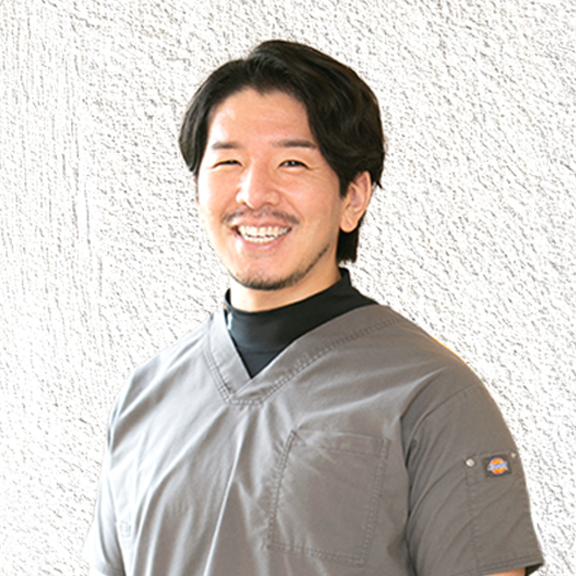
Orthopedic Specialist & Sports Doctor
Dr. Nagumo initially built his career as a surgical oncologist specializing in orthopedic cancer treatment. Subsequently, he moved to the United States to engage in advanced research in the field of regenerative medicine.
It was during his time in the U.S. that a personal injury led him to realize the critical importance of sports medicine. Upon returning to Japan, he transitioned his focus to become a sports orthopedic surgeon.
Currently, he leads the "Athlete Support Program," which provides comprehensive medical support to athletes using a combination of blood analysis and cutting-edge regenerative medicine technologies.
[Click here for the program introduction page:https://nagseikei.jp/en/dr/]
- J Higuchi, et al.: Associations of clinical outcomes and MRI findings in intra-articular administration of autologous adipose-derived stem cells for knee osteoarthritis. Regenerative Therapy. 2020; 14: 332–340
https://pubmed.ncbi.nlm.nih.gov/32490058/ - D Hatsushika, et al.: Repetitive allogeneic intraarticular injections of synovial mesenchymal stem cells promote meniscus regeneration in a porcine massive meniscus defect model. Osteoarthritis Cartilage. 2014; 22: 941-950
https://pubmed.ncbi.nlm.nih.gov/24795274/

